


If you are looking for a programme that will inspire you to grow spiritually, intellectually, and emotionally, look no further than Religion, Innovation, and Mental Health (RIM). The visionary Pastor Samuel Entsua-Mensah of the Global Presbyterian Worship Centre Eindhoven (GPWC) organized this programme, in partnership with the Netherlands-Belgium District of the Presbyterian Church of Ghana (PCG), the Young People’s Guild (YPG) and the Young Adult’s Fellowship (YAF). The programme featured eminent speakers who shared their insights and experiences on various topics related to religion, innovation, and mental health. You can find out more about the speakers and their topics on this link here. In this post, I will give you a brief overview of what each speaker talked about and how it can benefit you.

Innovation
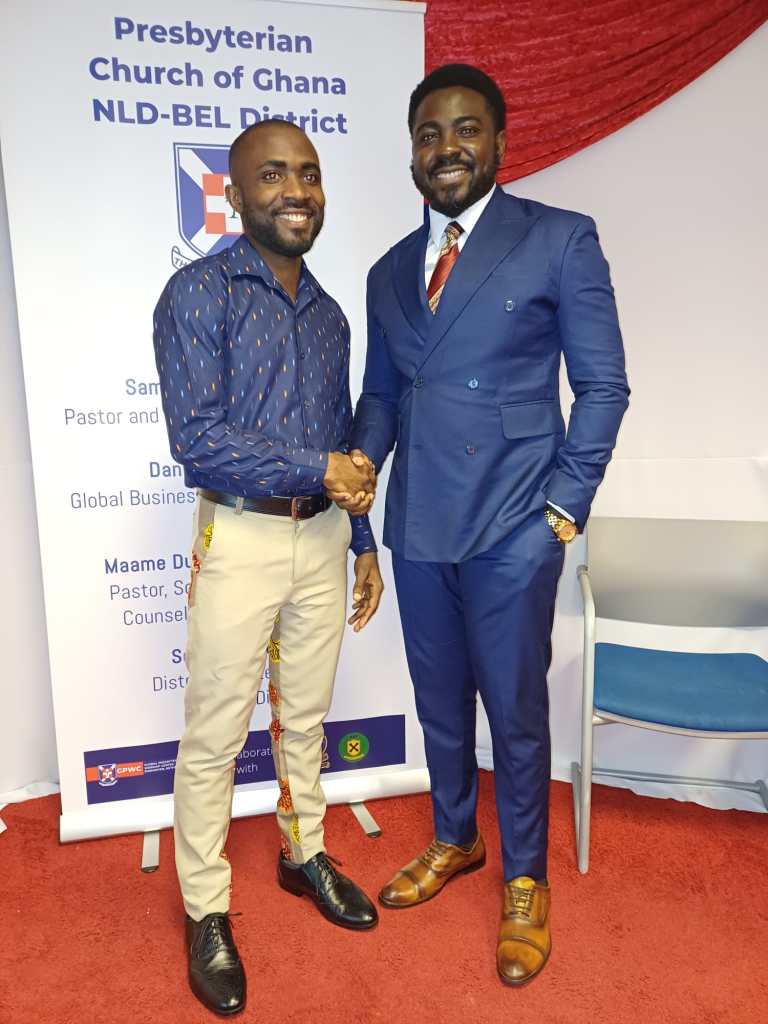
Do you want to shape the future or be left behind? This was the focus of the discussion on innovation. Mr. Daniel Sarpong Jnr, a renowned speaker, shared his insights on how innovation can make or break us in his captivating talk. Innovation, he said, is the process of creating and implementing new ideas that bring progress to societies. He challenged us to be the CEOs of our own lives, making decisions that improve and advance our situations. He showed how the world has changed dramatically due to innovations such as the steam engine, electricity, mobile phones, and artificial intelligence from the First to the fourth industrial revolutions. He also showed how these innovations disrupted and replaced old ways of doing things and that individuals must adapt or perish. He cited examples of how the typewriter, the newspaper, Nokia, and BlackBerry became obsolete because of new technologies. He explained Moore’s law, which predicts that computing power will increase exponentially while costs will decrease. He assured us that innovation does not destroy occupations, but it changes the way we work. He urged us to acquire valuable skills that will make us relevant in the future, such as cyber security, web designing, content creation, and podcasting. He concluded by saying that either we are innovating or expiring. The choice is ours.
Mental Health in the Church
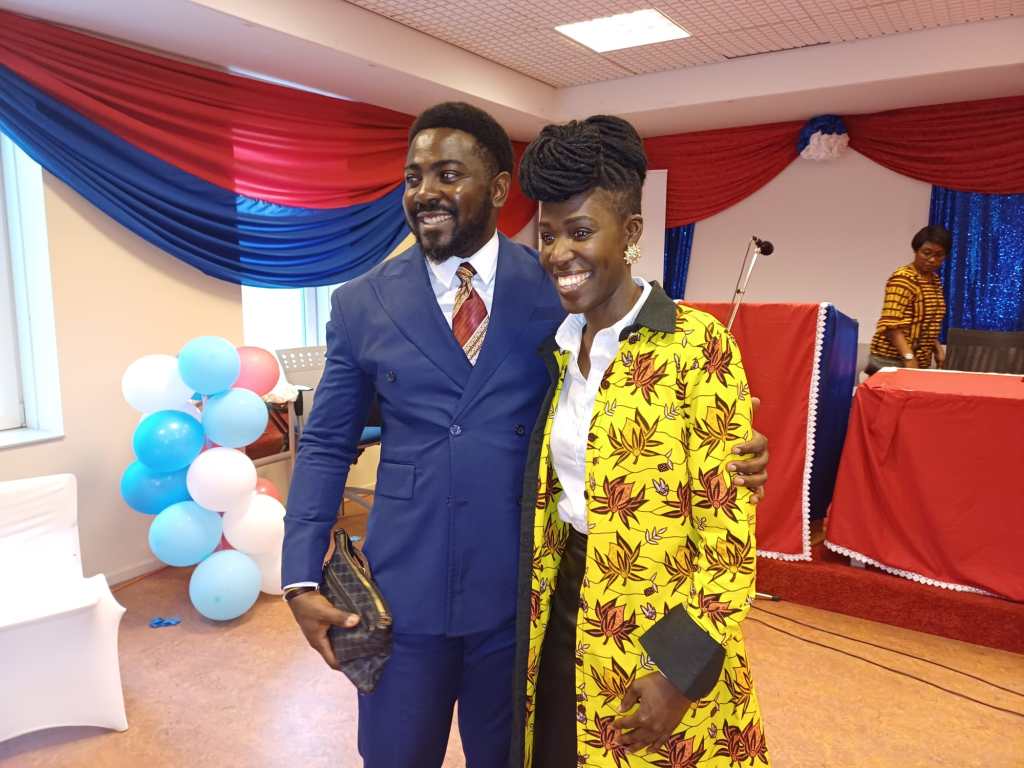
Mental health and mental disorders are two different concepts that affect our well-being. Pastor Maame Durowah Downer addressed this topic in her talk and urged the church members to pay attention to their mental health. She defined mental health as the state of balance and harmony in our emotional, psychological, and social aspects that enable us to cope with stress, relate to others and make choices. She contrasted mental health with mental illness, which is a condition that impairs our ability to function normally over a long period of time and alters our emotions, thinking or behaviour. She also shared some common mental health challenges that many people in the church face, such as burnout, depression, and anxiety. She gave some practical tips on how to deal with these challenges, such as eating and sleeping well, talking to professionals who can understand our culture and background, praying and showing love and compassion, keeping a journal, maintaining an active social life, and exercising, and having positive affirmations. She emphasized that seeking help is not a sign of weakness, but a sign of courage and faith. She encouraged the church members to take care of their mental health as a way of honouring God and serving others.
Religion, Spirituality and the Youth in Europe

Rev. Seth D. Adzokatse delivered a powerful message on religion and spirituality among the youth in Europe. He challenged us to rethink our understanding of religion as not just a belief in and worship of a supernatural power, but also a commitment and obligation to that power. He contrasted religion with spirituality, which is the quality of being concerned with the human spirit or soul, and the things that transcend our physical reality. He argued that as Christians, we cannot separate religion and spirituality, because we have a binding relationship with God who is spirit, and we worship him in truth and spirit. He acknowledged that many young people today are dissatisfied with organized religion, and are seeking spiritual fulfillment elsewhere such as replacing religion with their passion. However, he pointed out that recent research shows that many Gen Z and Millennials in Western Europe still value religion, and have experienced a boost in their faith during the pandemic. He concluded by inviting us to receive the Holy Spirit, who empowers us, gives us a passion for lost souls, inspires us to innovate, and grants us a sound mind.


 oak27oak